AI Will Not Make Your Job Chill
People keep talking about how AI will make their job easy, and I don’t really understand why.
In the Industrial Revolution, textiles were broadly automated. A single person’s labor could now produce much more cloth than before. It turned out people like having nice clothes, demand for shirts went up, and now I own several novelty T-shirts that I wear once a year. I assume the factory job producing this was still hard work.
Richard Gatling, inventor of the gatling gun, invented the first machine gun. According to a letter he wrote to a friend, he was motivated by reducing the size of armies.
It occurred to me that if I could invent a machine—a gun—which could by rapidity of fire, enable one man to do as much battle duty as a hundred, that it would, to a great extent, supersede the necessity of large armies, and consequently, exposure to battle and disease be greatly diminished.
In practice, the appetite for war was quite big (war being zero-sum), so armies were still big during WW1 and WW2. Soldiers in those wars did not have an easy time despite their better tech.
The thing I’m gesturing to here is that something being easier to produce doesn’t lead to people doing the same work in less time. There is instead a complicated relationship of how much new demand is unlocked, the best ways to get people to fill that new demand, and the resulting equilibrium typically still involves hard work.
With the rise of coding agents in particular, I find I have less downtime than before. It feels like if I am not sending an agent on an adventure, I’m not doing all that I could. And, this is not an unfamiliar feeling. ML work was like this too. If you aren’t running an experiment training a model overnight, what are you doing?
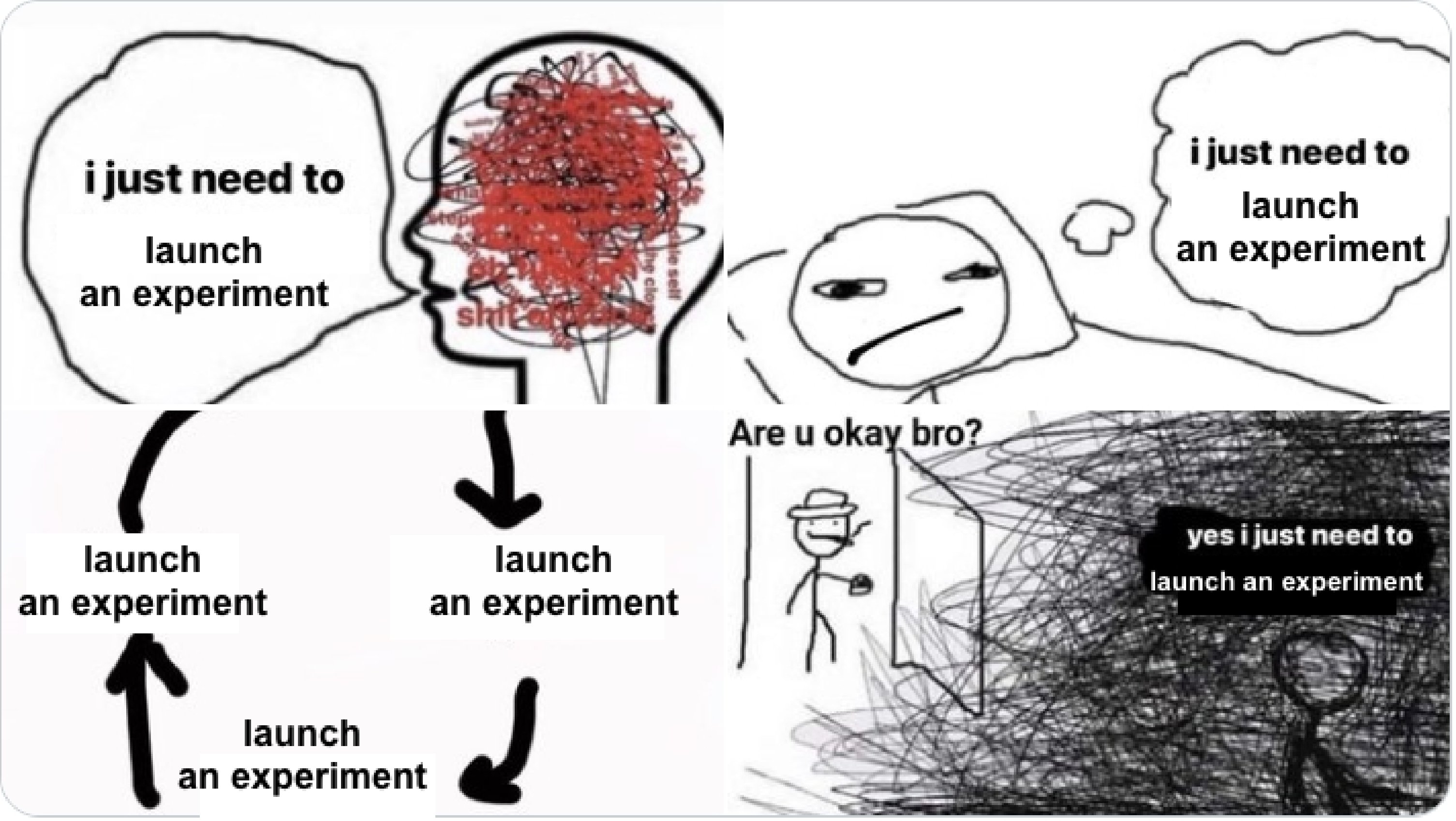
As coding has become more commoditized, there is a growing divide between people who liked building software, and people who liked writing code. I was one of the weirdos who liked the latter, who got into coding via algorithms and found tech interviews fun. Writing code was my downtime between conceptual work. Now this is gone, because it’s irresponsible to write code from scratch. Writing code from scratch is for free time now.
I don’t think AI has made my job chill, and I feel like I am front-line compared to much of the economy. My expectation is that although more slices of my job as a researcher will be automated, the remaining work will just expand to fill the remaining time, and there won’t be any top-level agreement that all AI researchers will agree to only work 20 hours a week. The pressures of competitive capitalism will push too hard on maximizing output.
Amazon warehouses are another good case study for this. If you had to pick a single company that speedruns capitalism, Amazon is top of the list. It’s not widely known, but transportation and warehousing has the highest rate of nonfatal work injuries in the US. Based on the Bureau of Labor Statistics, the 2024 rate was 4.4 injuries and illnesses per 100 full-time workers.
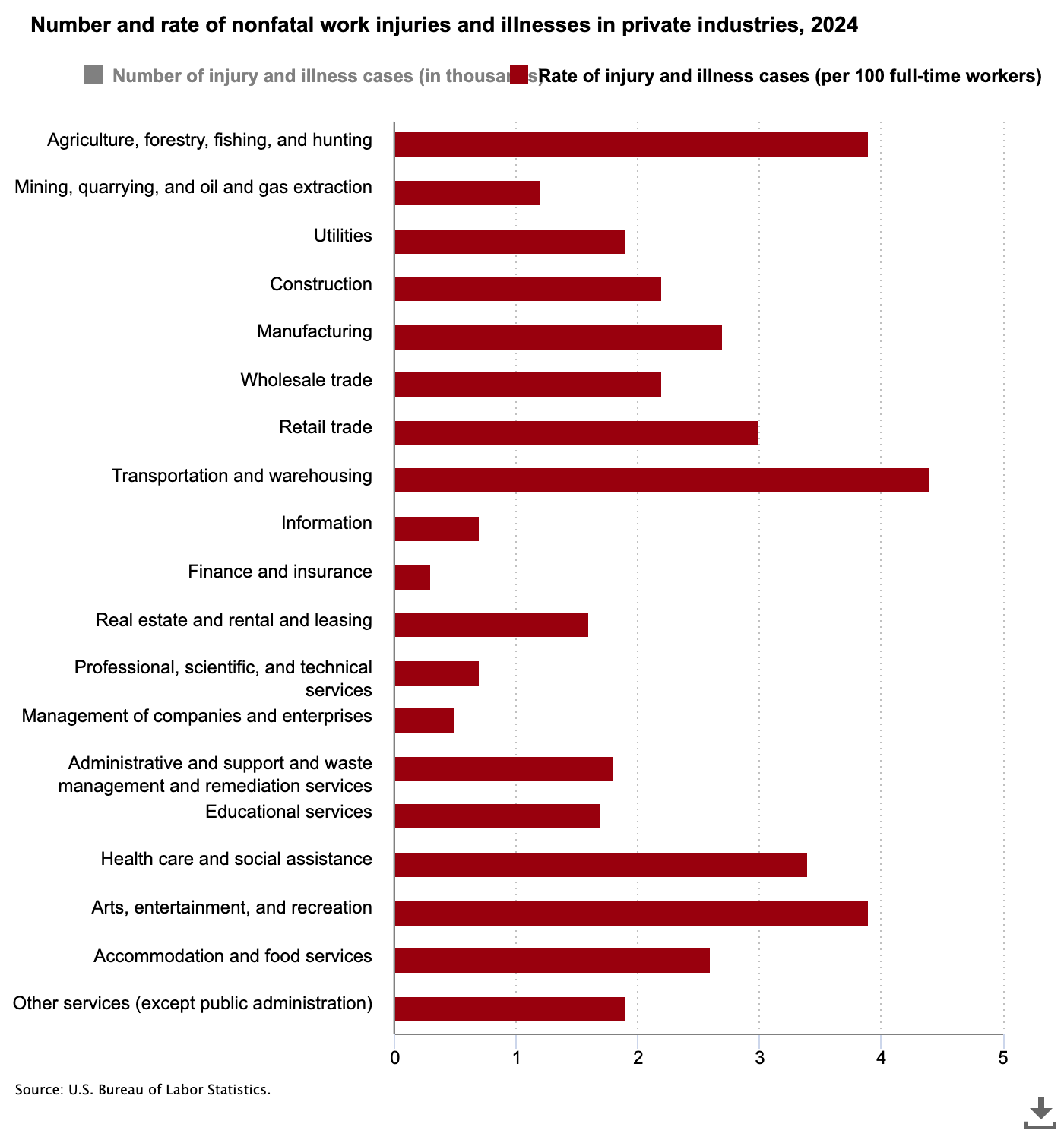
How do Amazon warehouses in particular compare? The results are not great. Based on reports from labor unions, Amazon warehouses were 7.7 injuries per 100 FTEs in 2021. For fulfillment centers, warehouses with robotic facilities see more injuries per worker, not fewer. This is attributed to two factors:
- Quotas at facilities with robots are set higher, increasing from 100 items per hour to 300-400 items per hour. This increased speed puts more pressure on workers.
- To satisfy the robot systems, workers do narrower ranges of motion more often, which increases RSI issues.
It’s hard to deny this works as a consumer. My Amazon packages arrive on time. Still, the automation sure didn’t make fulfillment center jobs be chill, safer, or more relaxing. Do LLM improvements make skilled labor more similar to fulfillment center work, or less?
Projecting the future is notoriously hard, but here is my best guess. LLMs will get better at an increasing range of skills. For a while, this will not lead to any job loss, because increasing abundance will lead to higher demand. But the nature of those jobs will become either more tiring, or more boring, or both. They will still be rewarding, or better than they were before if you’re a fan of high intensity work. It certainly won’t be chill.
And then, slowly then all at once, certain jobs will have 100% of their required skills be completable by LLMs, and those jobs won’t exist anymore.
P.S: Certain jobs disappearing doesn’t say anything about the overall labor market. It’s very possible employment stays the same as alternate kinds of jobs arise. However, I think it’s important that people typically argue that either employment will go down, or employment will stay the same. No one says employment will go up. I don’t feel informed about the question of employment, so my uninformed guess is to take the average and say it’d go down.